Top 6 instagram.com Alternatives 2026

Most privacy conscious Mac users struggle to find AI assistant and voice agent tools that keep all data, prompts, and reasoning fully on their device without relying on cloud services. Existing offerings often default to remote processing, subscription billing, or require sending sensitive conversations and documents off device, leaving users with little control over their data. After reading you will be able to compare six local-first AI and voice assistant tools for Apple hardware on privacy, offline capability, platform integration, and licensing to find the solution that matches your workflow and confidentiality requirements.
Table of Contents
- MINGLLM
- LocalVocal
- Enclave AI
- macMLX
- LocalChat.app
- Futurelab Studio AI Tools
- Evaluating AI Assistants for Local Operation and Integration
MINGLLM
At a Glance
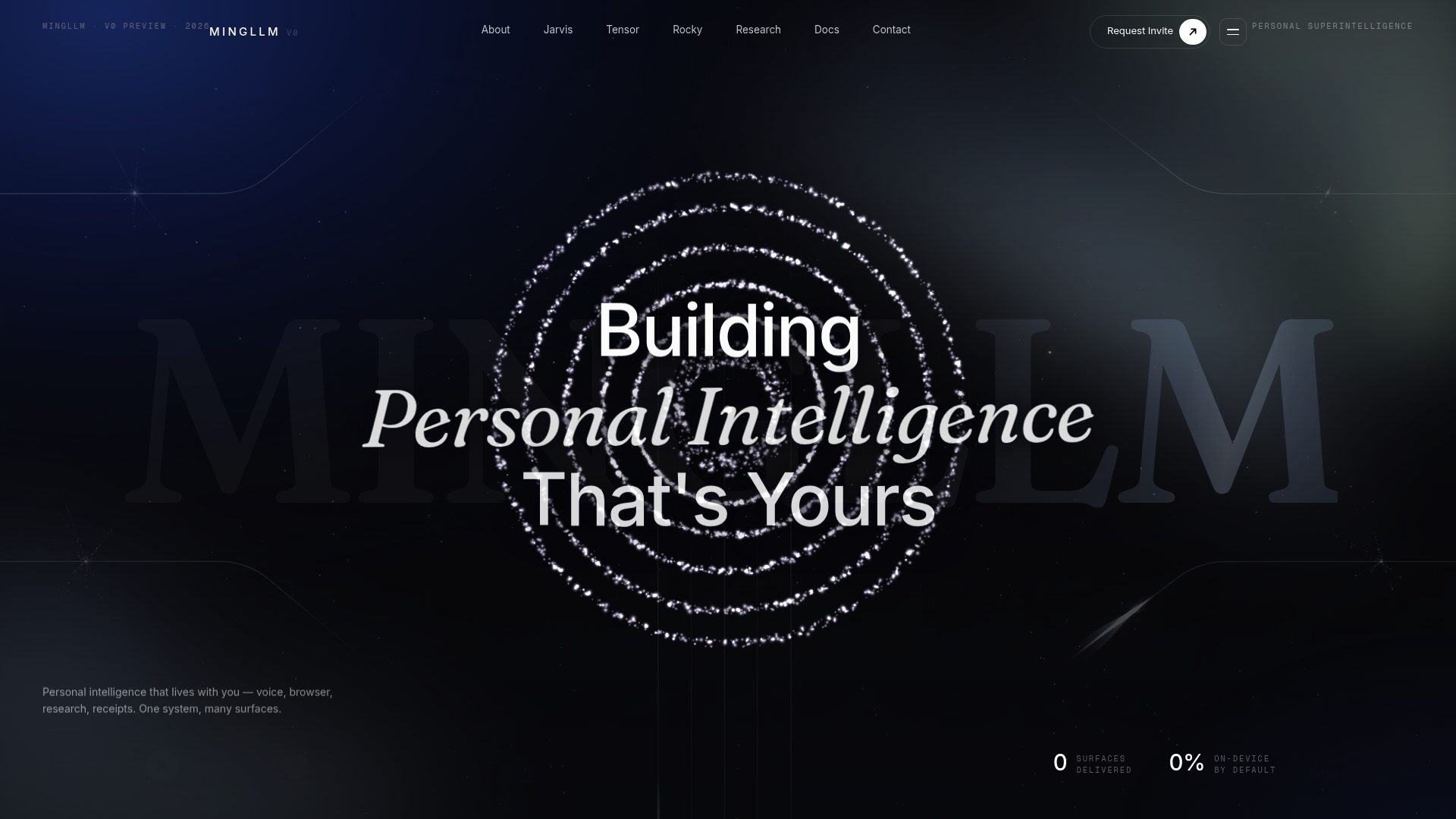
Runs entirely on your hardware, keeping models, memory, and reasoning local so sensitive research and command logs never default to a cloud service. The platform packages voice agents, a browser side panel, research tooling, and audited action logs into a Mac-first assistant.
Core Features
MingLLM uses on-device operation for privacy and security, leveraging your GPU and local runtime for memory, reasoning, and action. Voice control comes from Jarvis and Rocky for automation and system commands.
A side-panel agent called Tensor synthesizes open tabs and returns source-grounded answers. Research tools structure claims into evidence maps and Receipts create transparent action trails you can review or revoke.
Key Differentiator
Runs entirely locally on your machine, giving you full control over models, data, and permissions rather than relying on a remote service. That local-first architecture is paired with cross-surface integration including voice, native Mac app control, and a browser side panel.
Pros
-
Prioritizes privacy with local processing. Your prompts, memory, and reasoning stay on your device which reduces external exposure compared with default cloud assistants.
-
Deep Mac integration lets the voice agent execute tasks across native apps. Use voice to create calendar events, draft messages, or run scripts without routing data off device.
-
Tensor provides cross-tab synthesis and citation-first answers, useful when you need source-backed summaries from multiple open pages.
-
Receipts and action logs record what the assistant did and why. That traceability helps audits and reversibility when an automated action needs rollback.
-
Designed for offline use and continuous access. If your network drops, core features remain available because models and runtime live locally.
Cons
- Requires reasonably capable local hardware for good responsiveness; older Macs may face slower performance or reduced feature availability.
Notable Integrations
MingLLM integrates directly with native macOS apps for system-level actions and automation. The Tensor side-panel plugs into Chrome to analyze open tabs and return source-grounded answers without copying links manually.
Who It’s For
Tech-savvy Mac users who want maximal privacy and control. Researchers, developers, and professionals who need local data custody, auditable action trails, and voice-first workflows will find the platform aligns with those priorities.
Unique Value Proposition
Runs local models and a full local runtime so your memory, reasoning, and automation occur on your device. That design means you control model weights, permissions, and action logs while retaining a voice-first agent able to operate across Mac apps and browser context.
Real World Use Case
A researcher consolidates scattered papers and open tabs using Tensor to create evidence maps, then uses Jarvis to batch-schedule follow-up emails and calendar blocks. All sources and actions remain on the researcher’s Mac with receipts that document every automated change.
Pricing
Access is invite only. The vendor requests invites rather than publishing a price list, suggesting early access or pre-seed distribution. Contact MingLLM for availability and any enterprise options.
Website: https://mingllm.com
LocalVocal
At a Glance
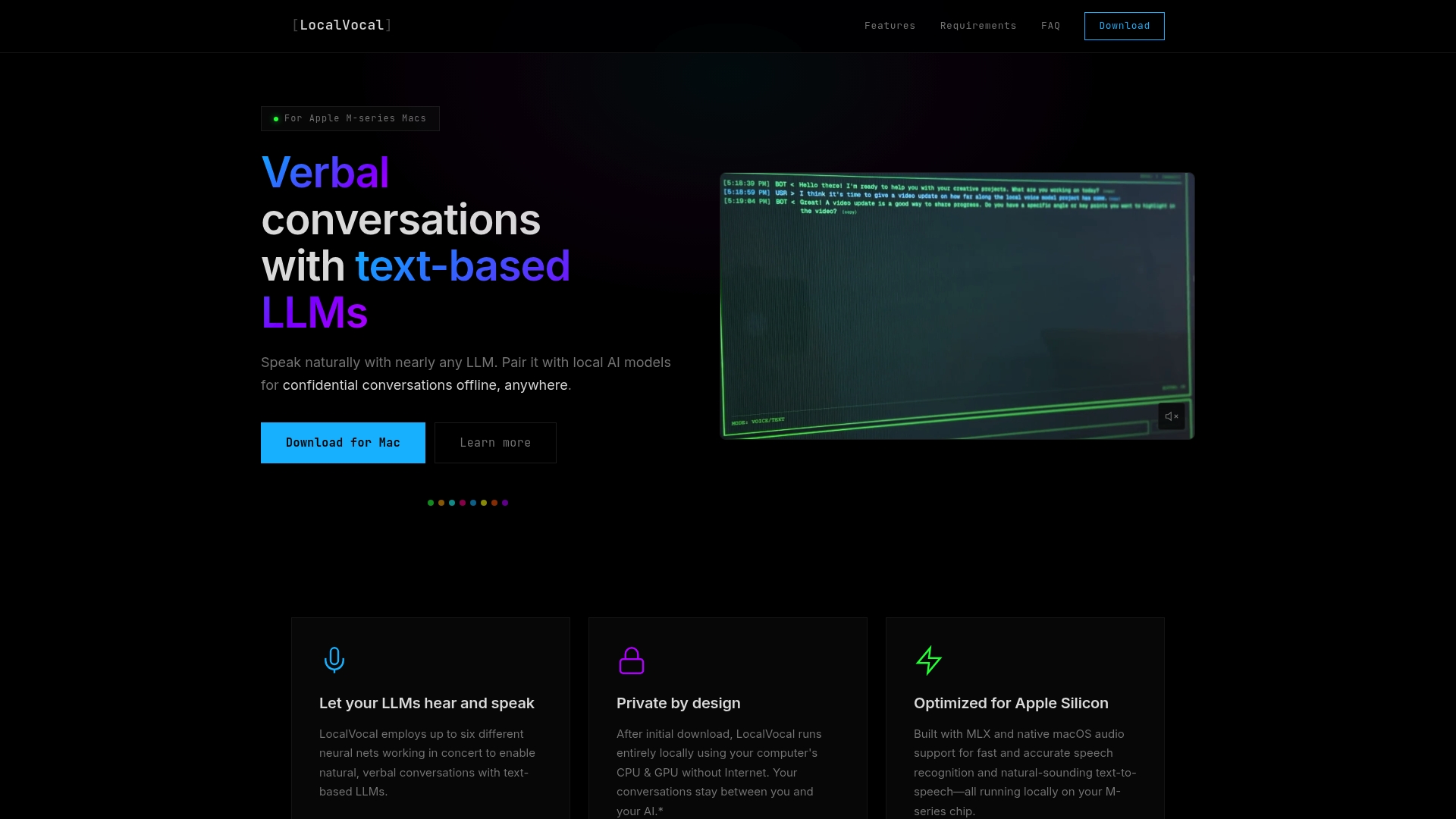
LocalVocal advertises offline, private voice conversations on Apple Silicon Macs, and the vendor states it can utilize up to six neural nets tuned for M-series performance. The app requires macOS 15 or later and about 3GB of disk space for local models.
Core Features
Native macOS audio handles speech recognition and text to speech with low latency. The app supports both local and remote LLM servers so you can run everything on device or point to a local server.
Session management saves and reloads conversations so you can pick up where you left off. Natural speech controls include interruption, pause, and replay during a single conversation.
The product includes voice cloning tools that can recreate a personalized voice from audio samples for more natural responses.
Key Differentiator
LocalVocal advertises that conversations stay on the device and that the app runs entirely offline when using local models. That privacy-first architecture, paired with macOS native audio stacks, targets users who will not accept cloud processing for voice data.
Pros
-
Runs locally which keeps transcripts and audio on your Mac. That matters for executives and privacy conscious users who do not want cloud copies.
-
Optimized for M-series hardware so speech feels responsive and TTS sounds natural on real conversations instead of robotic pauses.
-
Session management makes follow up simple. You can resume earlier threads and reuse context without retyping or rebuilding prompts.
-
Voice cloning provides personalized assistant voices for hands free workflows and faster verbal confirmations.
-
Supports both local and remote LLM servers which gives flexibility when a small model on device is not sufficient.
Cons
-
English only for now which excludes non English speakers and multilingual teams.
-
Requires Apple Silicon with macOS 15 or later so it will not run on Intel Macs, iPhones, or iPads.
-
Machines with small RAM must use tiny models or remote servers which reduces model quality and local accuracy.
-
No support for vision or multi modal models so tasks that need image understanding are not possible.
When It May Not Fit
If you need mobile use on iPhone or iPad LocalVocal is not suitable. If your workflow depends on multi modal inputs such as camera or PDF parsing you will need a different tool. Teams requiring non English interaction should look elsewhere.
Notable Integrations
- OpenAI compatible LLM servers for remote connections.
- LM Studio recommended as a local server option.
- Hugging Face used for voice cloning pipelines.
Who It’s For
Apple Silicon Mac users who prioritize on device privacy and want natural spoken conversations with LLMs. Ideal for privacy conscious researchers, executives, and power users who keep sensitive prompts and history off cloud servers.
Unique Value Proposition
One time pricing plus local only operation. LocalVocal lists a one time Standard edition at $9.99 and an Advanced edition at $29.99 and advertises fully local voice interactions so users avoid ongoing subscription costs and cloud audio retention.
Real World Use Case
An executive uses LocalVocal on an M1 MacBook to conduct confidential verbal briefings with an AI assistant and uses voice cloning so the assistant speaks in a familiar cadence during meeting prep and private rehearsals.
Pricing
Standard edition is $9.99 one time. Advanced edition is $29.99 one time. The model fits users who prefer a single purchase rather than a monthly subscription.
Website: https://localvocal.ai
Enclave AI
At a Glance
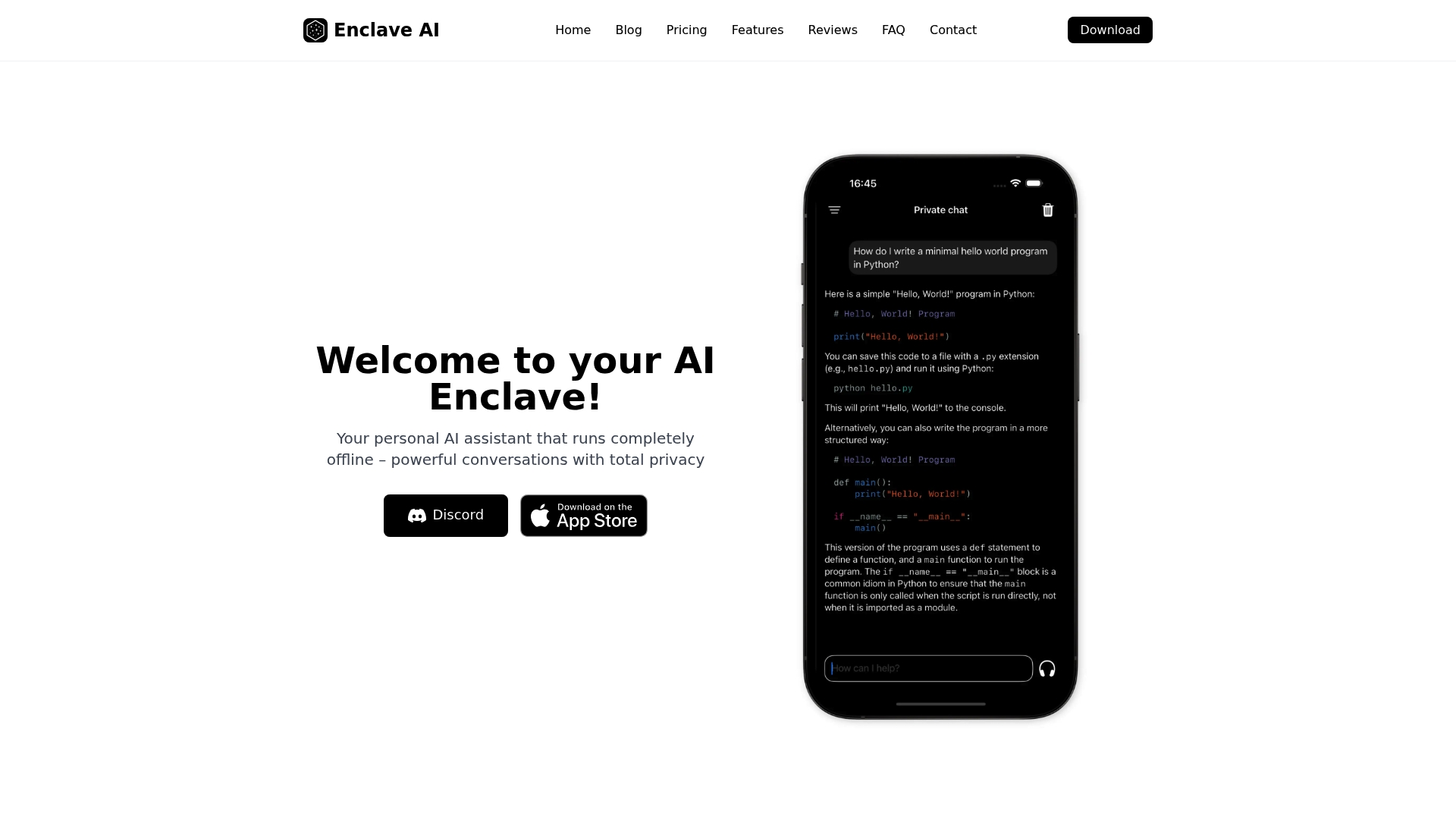
Enclave AI claims all AI processing happens locally on your device, enabling voice chat and document analysis without an internet connection. The app targets privacy focused iPhone and Mac users who need offline AI that integrates with Siri and Shortcuts.
Core Features
Local voice chat processed entirely on device lets you talk to an assistant without sending audio to a server. The app provides access to curated open source models optimized for mobile and desktop.
You can create and manage personalized AI assistants with custom prompts and personalities. Document interaction supports PDFs and text files for secure local search and summarization. Deep Siri and Shortcuts integration enables offline automation workflows.
Key Differentiator
Enclave AI claims it runs powerful AI models entirely offline on your device, which means no network dependency for core assistant tasks. That design prioritizes private processing over the raw scale of cloud models and places control in your hands.
Pros
- Complete privacy: All core processing occurs locally so your data does not need to leave your device. This suits sensitive notes, drafts, and personal documents.
- Responsive on-device voice: Conversations feel fast and fluid even on older hardware like an iPhone 12 Pro Max, according to the vendor. Voice workflows replace many simple online queries.
- Open source model access: You get a range of curated models optimized for mobile and Mac, letting you pick models that balance capability and speed.
- Custom assistants and prompts: Multiple assistants with distinct personalities let you separate tasks like brainstorming, code help, or personal scheduling.
- Siri and Shortcuts hooks: Tight integration lets you trigger assistants and automations with native voice commands.
Cons
- Model capability limits: Local models are less capable than large cloud models such as GPT-4 for complex reasoning or long context tasks.
- Hardware dependent performance: Older or low end devices will struggle with heavier models and longer documents.
- Manual model management: Because everything runs offline, you manage model files and storage yourself rather than relying on a hosted service.
When It May Not Fit
If you routinely need the most advanced cloud models for long form code generation or multi document synthesis, Enclave AI may feel constrained. Teams that need centralized model control or shared cloud memory will prefer a hosted solution.
Notable Integrations
- Apple Shortcuts for building offline automation flows that invoke assistants.
- Siri for hands free triggers and system level voice commands.
Who It’s For
Privacy conscious iOS and macOS users who want local AI for sensitive text and voice tasks. Tech savvy individuals, privacy advocates, and professionals handling confidential documents will get the most value.
Unique Value Proposition
Runs AI models entirely offline on your device and integrates with Siri and Shortcuts so you can have private voice and document assistants without a network dependency. For users who refuse to send sensitive data to servers, that local control is decisive.
Real World Use Case
You set up a personal assistant on your iPhone for brainstorming and summarizing legal notes. You ask by voice via Siri, the assistant reads a local PDF, and it returns a concise brief without any data leaving your device.
Pricing
Free tier provides local AI and model access. Pro subscription at $9.99/month unlocks cloud model access such as GPT, Claude, and Gemini plus cloud credits for hybrid workflows.
Website: https://enclaveai.app
macMLX
At a Glance
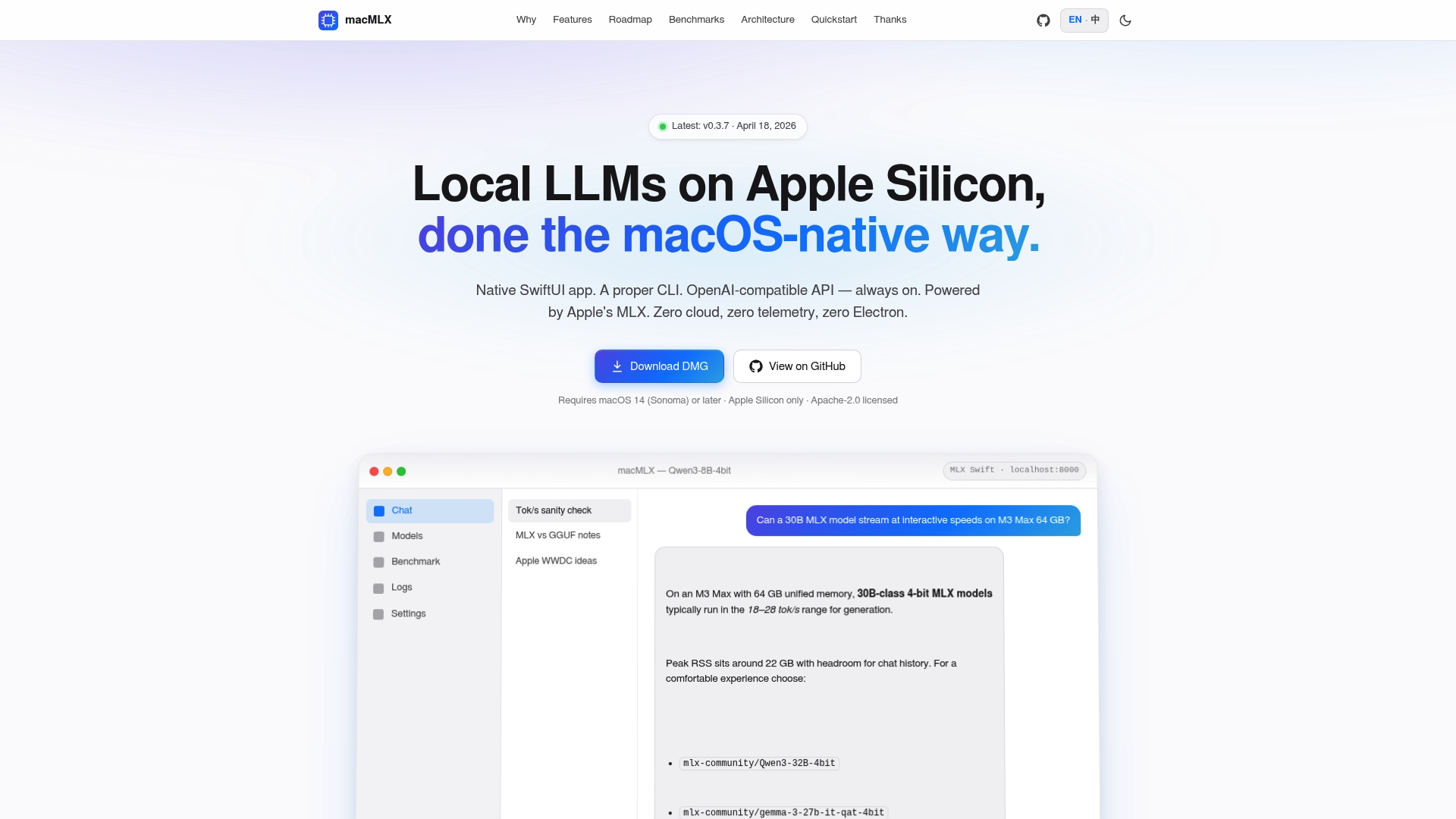
macMLX ships as a native macOS SwiftUI app plus a shared CLI that runs inference in-process on Apple Silicon without cloud calls or telemetry. The app targets developers and researchers who want local, low-latency LLM inference and model benchmarking on their Mac.
Core Features
macMLX provides a polished native macOS SwiftUI GUI, an ANSI dashboard CLI, and an always-on OpenAI-compatible API for local integrations. The inference runs inside an in-process MLX engine optimized for Apple Silicon. Model downloads are resumable and sourced from Hugging Face mirrors with progress shown in logs and the GUI.
Key Differentiator
A single inference core powers both GUI and CLI, so the experience and results match whether you run interactive chats or script experiments. macMLX deliberately avoids cloud dependencies and telemetry, keeping models and user data on your device.
Pros
- Native macOS design speeds onboarding. The SwiftUI interface follows Mac conventions so you skip configuration and use menus and windows you already know.
- Shared inference core between GUI and CLI keeps behavior consistent. Scripts, local apps, and interactive chat return the same outputs.
- Local-only inference minimizes data exfiltration risk for sensitive prompts. For privacy-focused workflows this is the primary win.
- Resumable model downloads from Hugging Face mirrors avoid repeated failures on flaky networks and give clear progress in both GUI and logs.
- The OpenAI-compatible API simplifies swapping local models into existing tools and local integrations without rewriting client code.
Cons
- macMLX requires macOS 14 or later and Apple Silicon hardware, so Intel Macs and any non-Mac platforms are excluded.
- The tool emphasizes inference and chat rather than training. If you need fine-tuning, the feature set is thin and you will need external tooling.
- Documentation on advanced model customization and training hooks is limited in the provided data, which slows adoption for experimental teams.
When It May Not Fit
If your work depends on distributed training, multi-node clusters, or GPU farms outside Apple Silicon, macMLX will not meet your needs. Teams that require Windows or Linux CI runners cannot run models locally on their standard build agents. Service businesses that bill for hosted inference also will not benefit from a local-only approach.
Notable Integrations
- Integrates with Hugging Face for model discovery and downloads. The OpenAI-compatible local API makes it straightforward to hook macMLX into existing tools that already speak that protocol.
Who It’s For
Privacy-conscious Mac users and developers with Apple Silicon who want to prototype, benchmark, or embed LLMs locally. Good for researchers testing model behavior, app developers wanting on-device chat, and engineers measuring throughput on M1 or M2 hardware.
Unique Value Proposition
A native macOS SwiftUI app and a shared CLI both backed by an in-process MLX inference engine that avoids cloud dependency and telemetry. That combination gives you the convenience of a GUI, the repeatability of a CLI, and on-device privacy without running Python environments.
Real World Use Case
A macOS developer downloads Qwen3-8B-4bit from Hugging Face into macMLX, runs local benchmarks, and validates chat behavior. They integrate the OpenAI-compatible endpoint into a prototype app so user data never leaves the device.
Pricing
No explicit pricing information is provided in the product data. The vendor does not list a public price in the supplied description.
Website: https://macmlx.app
LocalChat.app
At a Glance
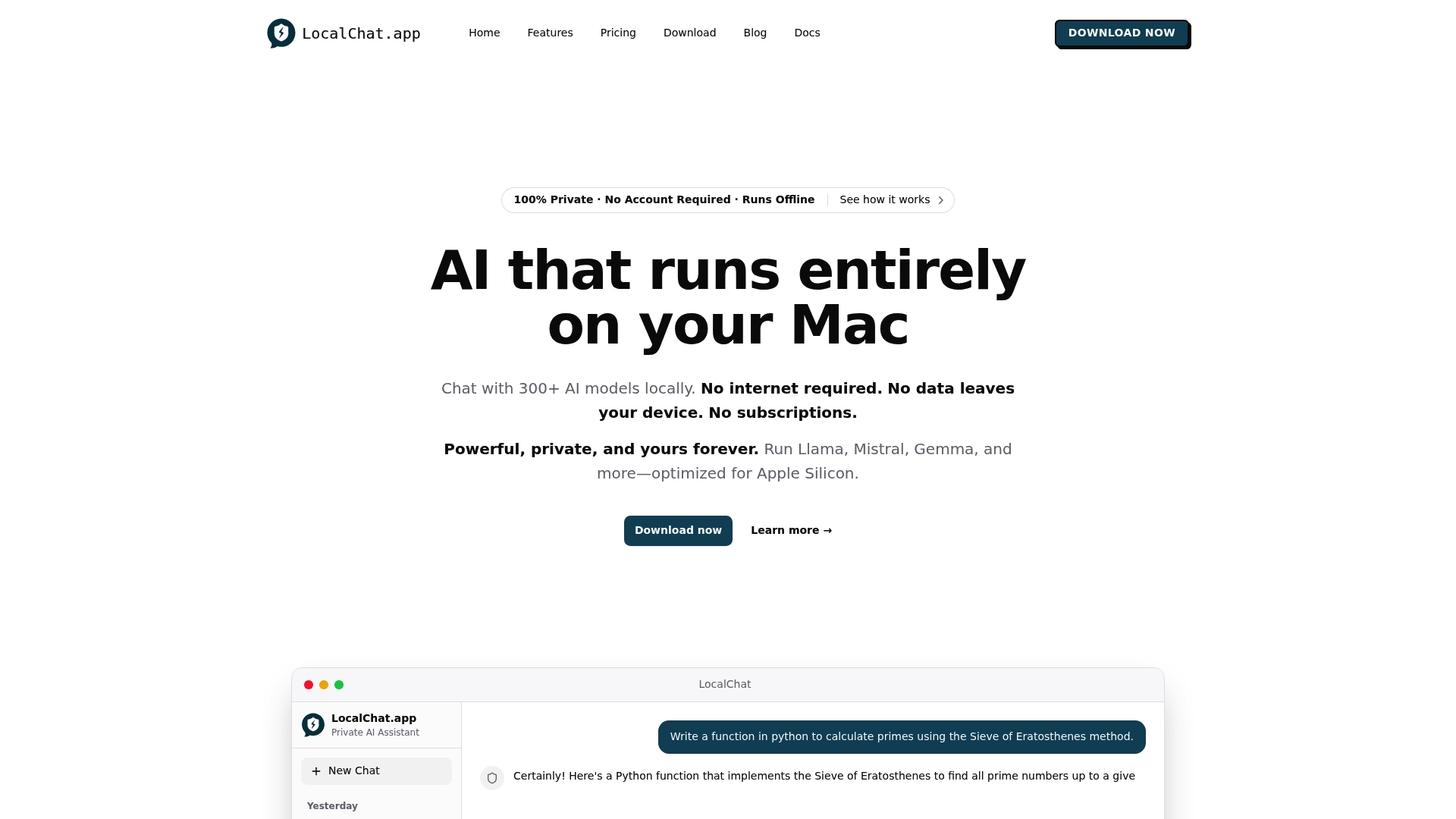
LocalChat.app reports support for over 300 AI models running entirely on your Mac, offline and subscription free. The app targets Apple Silicon devices and advertises one-time lifetime licenses instead of recurring fees, positioning privacy and local ownership as the product’s core selling points.
Core Features
- Runs locally on Apple Silicon for on-device inference and fast response times after initial setup.
- Supports a wide range of open-source models including Llama, Mistral, Gemma, Qwen, and DeepSeek per the vendor.
- Complete offline functionality with no account required and one-click model downloads from Hugging Face.
- Document interaction and basic model management built into the app, with planned voice input and image generation features.
Key Differentiator
According to the company, LocalChat.app lets you download and run 300+ models on-device so you can switch models without sending data to the cloud. That local model library plus the lifetime licensing model aims squarely at users who refuse cloud-based AI for sensitive work.
Pros
-
Highly private: all inference occurs on your machine so your prompts and documents remain local. This removes cloud storage vectors for sensitive material.
-
No ongoing subscriptions: the vendor sells a one-time license which removes recurring billing and simplifies budgeting for individuals and families.
-
Broad model support: the app’s model picker and automatic updates make experimenting with different open-source models practical without manual installs.
-
Optimized for Apple Silicon: LocalChat.app reports hardware-specific optimizations for M1 through M4 chips, which translates to noticeably faster local inference than generic builds.
-
Offline document tools: you can query local files directly, useful for private research or reviewing confidential documents.
Cons
-
macOS only: Windows and Linux support are planned but not currently available, limiting cross-platform teams.
-
Hardware requirements: you need a recent Apple Silicon Mac and adequate RAM. The vendor recommends 8 to 16 gigabytes, which excludes older machines.
-
Basic advanced controls: power users seeking deep model customization or multiuser collaboration will find the interface intentionally simple.
When It May Not Fit
If your workflow requires cloud-based collaboration, real-time multiuser sessions, or integration with enterprise identity providers, LocalChat.app will feel limited. Also, organizations that standardize on Windows or Linux cannot deploy it until the company releases those builds.
Who It’s For
Privacy-conscious Mac users, solo practitioners, and small teams who need offline AI for sensitive documents. Good for researchers, lawyers, and journalists who prefer local control and lifetime licensing over cloud services.
Unique Value Proposition
A one-time license for lifetime access. LocalChat.app advertises that you pay once and retain offline AI capability on Apple Silicon indefinitely. For users who prioritize local data ownership and predictable costs, that licensing model is the central benefit.
Real World Use Case
A legal firm uses LocalChat.app to index and query confidential contracts without uploading files to a cloud provider. Attorneys run different open-source models locally to compare summaries and redline suggestions while keeping client data on-premise.
Pricing
One-time payment tiers: Single License $49.50, Family License $199.50 for up to five devices. Team solutions are custom priced and the vendor advertised a 50 percent launch discount for initial customers.
Website: https://localchat.app
Futurelab Studio AI Tools
At a Glance
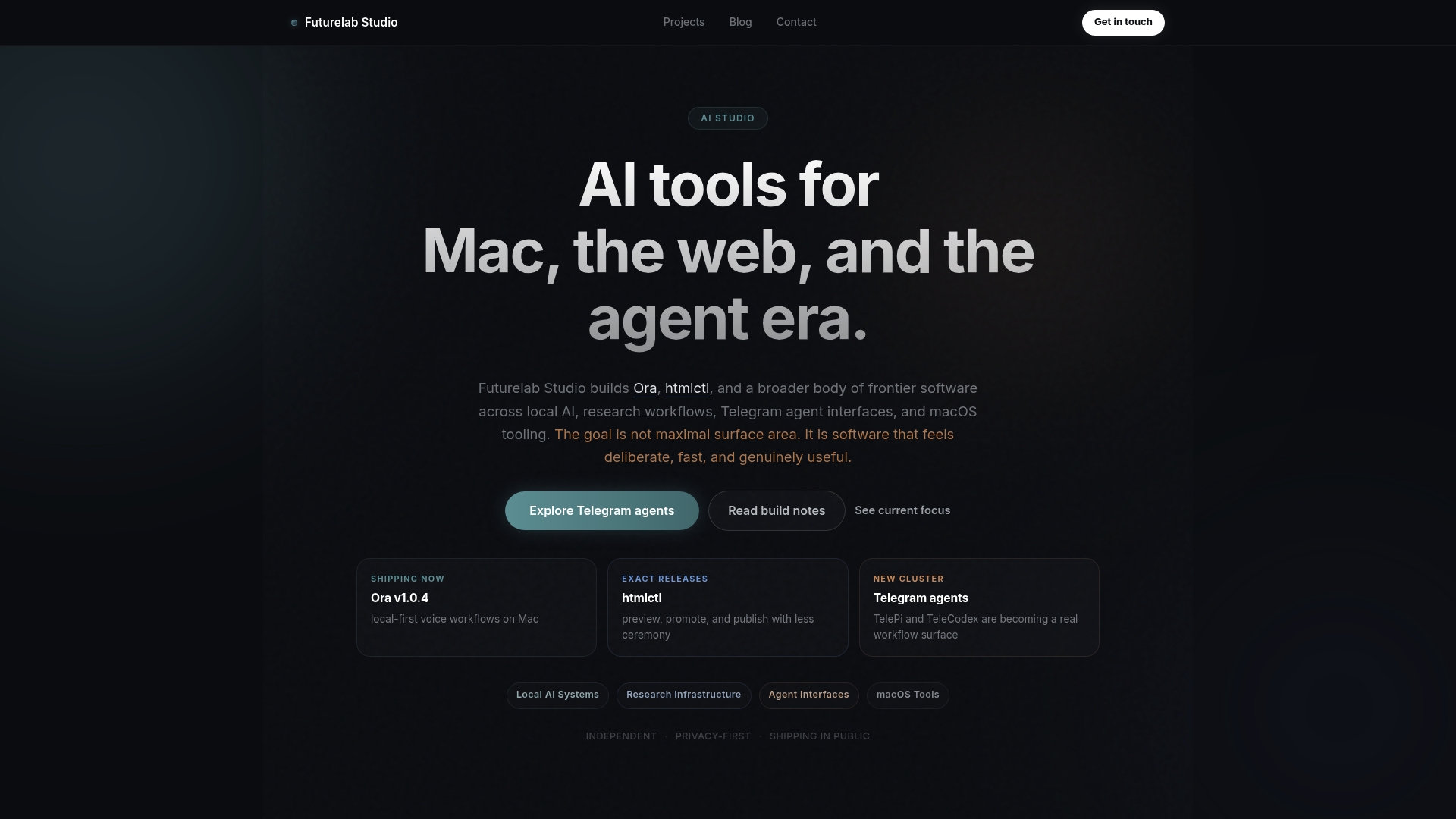
htmlctl promotes staging artifacts to production exactly, without rebuilding — a concrete mechanism that preserves artifact integrity across environments. According to the company, the suite focuses on local-first AI workflows, native Mac interactions, and transparent public development.
Core Features
- Ora: local-first voice workflows on macOS with on-device speech recognition and support for local models.
- htmlctl: exact staging-to-production promotion and deployment tooling that verifies artifacts before promotion.
- Telegram agents: TelePi and TeleCodex for remote supervision and mobile agent control.
The vendor advertises additional tools like htmlservd for release control and experimental projects that target research and web infrastructure management.
Key Differentiator
Futurelab Studio centers on explicit, self-hosted release promotion and local AI that respects privacy boundaries and native Mac behaviors. The company reports a strong emphasis on operator visibility and manual promotion flows rather than opaque managed pipelines.
Pros
- Independent and privacy-focused. The projects are open source and designed for users who want full visibility into what runs where.
- Local AI emphasis. On-device speech recognition in Ora reduces data exposure to third-party clouds and speeds up simple queries.
- Exact artifact promotion. htmlctl avoids rebuild drift by promoting verified artifacts, which is helpful when reproducibility matters.
- Agent-native tooling. Telegram agents provide lightweight remote supervision and can be useful for mobile oversight when SSH or full remote desktops are overkill.
- Active public development. The vendor states the products ship in public, which gives early access to fixes and the ability to audit progress.
Cons
- Not a managed cloud platform. Teams needing large-scale cloud infrastructure or managed features will find gaps in operational productization.
- Limited multilingual voice support. Some Ora features are primarily English focused and other languages are still evolving.
- Operational discipline required. Self-hosted release promotion demands careful processes and monitoring from operators.
When It May Not Fit
If your team depends on automatic scaling, fully managed CI/CD, or an SLA-backed cloud provider, Futurelab Studio will not match those operational guarantees. The tooling favors operators who accept manual promotion and self-hosting responsibilities.
Notable Integrations
- GitHub for source and artifact workflows.
- Telegram for mobile agent interfaces and remote supervision.
Who It’s For
Operators and developers who prioritize explicit release control, local AI workflows on macOS, and auditability. Ideal for small infra teams, security-conscious researchers, and devs who prefer self-hosted agents to third-party hosted assistants.
Unique Value Proposition
htmlctl promotes exact artifacts from staging to production without rebuilds, preserving deployment integrity. That single capability, combined with local-first voice tooling like Ora and Telegram agents, gives operators control over both AI inference and web publishing on their terms.
Real World Use Case
A developer uses htmlctl to publish static site assets from a verified Git artifact, promote the same artifact from staging to production, and avoid rebuild discrepancies. Another engineer runs Ora locally on macOS and manages a TeleCodex agent via Telegram for remote code supervision.
Pricing
Pricing is not explicitly stated. The vendor includes open-source components that are freely available and other pieces that likely vary by use case and support requirements.
Website: https://futurelab.studio
Evaluating AI Assistants for Local Operation and Integration
Selecting the right AI assistant for local use and privacy-conscious workflows on macOS can be a complex decision. Each option reviewed offers distinct advantages for specific scenarios, with MingLLM leading through its local-first architecture and comprehensive Mac application integration.
Balancing Operation Across Local Hardware
MingLLM excels in leveraging local processing capabilities, fully utilizing your device’s hardware to operate its models and maintain data privacy. LocalVocal also emphasizes privacy by supporting both on-device and server-based processing, allowing diverse operation setups. However, Enclave AI and others demonstrate hardware dependence, where lower-spec devices face performance constraints.
Licensing and Cost Considerations
While MingLLM operates on an invitation basis, potentially limiting access, competitors like LocalVocal, with its one-time pricing models, and LocalChat.app, offering lifetime licenses for personal and group use, present upfront pricing options. This approach ensures budget predictability, appealing to certain user groups seeking straightforward investments.
Best Fit for Various Scenarios
- MingLLM: Suitable for researchers and Mac users prioritizing local data privacy, voice-first workflows, and detailed action logging.
- LocalVocal: Effective for individuals needing responsive voice assistants optimized for Apple Silicon.
- LocalChat.app: Recommended for legal professionals or team environments requiring diverse model support without monthly subscriptions.
Our Pick
MingLLM sets itself apart through extensive local integration with native apps, enabling intricate workflows via voice commands, browser synthesis tools, and meticulous action logs. However, users needing multilingual compatibility or non-Mac support might prefer alternatives. MingLLM shines when task reversibility and privacy are paramount, making it the go-to solution for on-device computation and autonomous Mac operations.
Local AI Assistant Tools Comparison
When selecting a local AI assistant tool, privacy and robust integration capabilities are essential to consider.
| Product | Core Feature | Key Differentiator | Best For | Pricing | Notable Limitation |
|---|---|---|---|---|---|
| MINGLLM | On-device operation for privacy and action | Full control over data and permissions | Tech-savvy Mac users | Not disclosed | Requires capable local hardware for optimal performance |
| LocalVocal | Offline voice-first conversations | Optimized for M-series hardware | Apple Silicon users | $9.99 to $29.99 | Limited to English and requires macOS 15 or newer |
| Enclave AI | Offline AI voice and text assistants | Siri and Shortcuts integration | Privacy-conscious iOS and macOS users | $9.99/month | Local models are less capable for complex reasoning |
| macMLX | Native macOS GUI with local inference | Shared inference core between GUI and CLI | Apple Silicon developers | Not disclosed | Excludes Intel Macs and limits advanced model customization |
| LocalChat.app | Runs over 300 AI models offline | One-time lifetime license model | Researchers and journalists | $49.50 to $199.50 | Requires Apple Silicon and updated macOS |
| Futurelab Studio AI Tools | Ora for local voice workflows | Self-hosted deployment and artifact control | Infra-focused developers | Not disclosed | Requires operational discipline and limited multilingual support |
Enhance Your Social Experience with Private AI Control
Looking beyond typical social media platforms like Instagram can feel overwhelming when privacy and control top your list of priorities. MingLLM offers a unique solution by running advanced AI entirely on your Mac, keeping your personal data and interactions local and secure. With features like voice-controlled commands, a browser side panel that synthesizes open tabs with source citations, and research tools that organize scattered information, MingLLM empowers you to interact smarter and more privately.
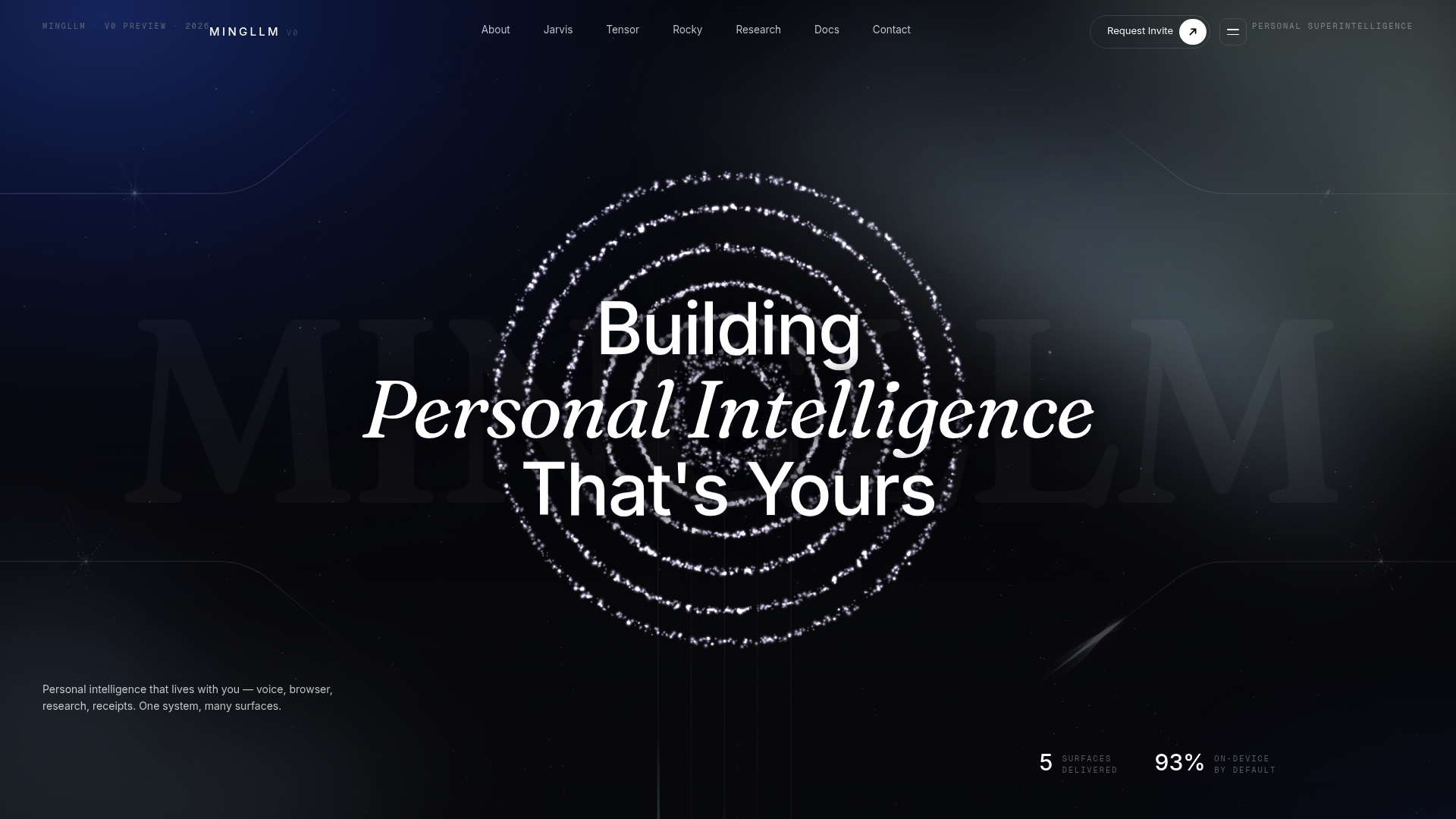
Discover how you can regain control over your online and AI-assisted experiences by visiting MingLLM’s homepage. Act now to use voice commands that integrate naturally with your device and organize your digital life without exposing your data to the cloud. Try MingLLM and see how local AI transforms your browsing and personal workflows.
Frequently Asked Questions
How does MINGLLM ensure privacy while using its features?
MINGLLM prioritizes privacy by running entirely on your hardware, keeping all models, memory, and reasoning local. This means sensitive research and command logs never leave your device, significantly reducing the exposure compared to cloud services.
Can I use MINGLLM for research tasks effectively?
Yes, MINGLLM includes a side-panel agent called Tensor that synthesizes information from open tabs and provides source-grounded answers. This feature is particularly useful for researchers who need to create evidence maps and ensure traceability of their automated actions.
What is the difference between MINGLLM and LocalVocal in terms of privacy?
LocalVocal also emphasizes privacy with local processing, but its focus is primarily on voice conversations. MINGLLM, however, offers a broader range of features including research tools and automated action logs, making it a better fit for those who require extensive local data custody aside from just voice functionality.
Does MINGLLM support offline usage?
Yes, MINGLLM is designed for offline use, so you can access core features even if your network drops. This is crucial for users who need uninterrupted access to memory, reasoning, and automation tasks without relying on an internet connection.
Can I track actions taken by MINGLLM?
MINGLLM includes a feature called Receipts, which maintains an audited action log that records what the assistant did and why. This traceability is beneficial for users who want to review or revoke automated actions at any time.