AI Model Weight Privacy: What You Need to Know

AI model weight privacy is defined as the protection of learned numerical parameters inside an AI model from unauthorized access, theft, and misuse that could expose sensitive personal data or intellectual property. These parameters, called weights, encode everything the model learned from its training data. When weights are compromised, that training data can be partially reconstructed by an attacker. For anyone who cares about where their personal data ends up, understanding how weights work and how they fail is the first step toward doing something about it.
What is AI model weight privacy and why does it matter?
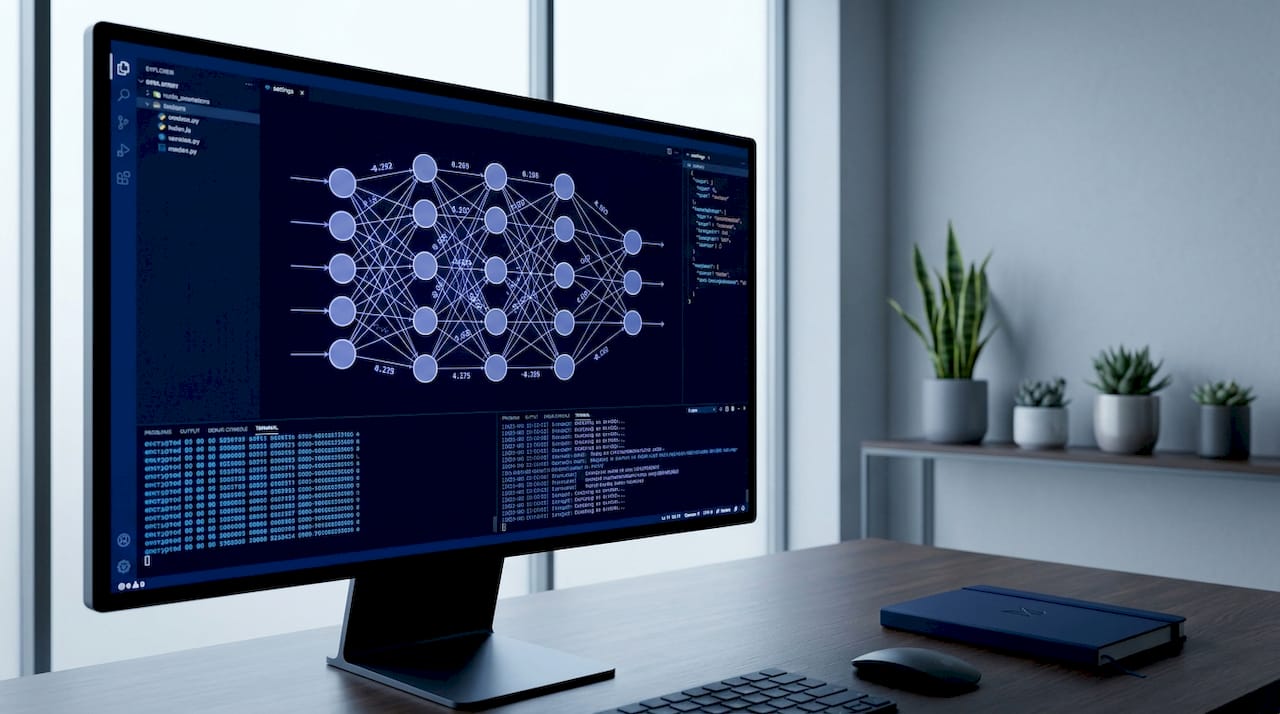
Model weights in AI are the numerical values assigned to connections between neurons in a neural network, functioning much like synapses in a biological brain. Every time a model trains on data, those weights adjust to reflect patterns in that data. The result is a model that has, in a very real sense, absorbed information from its training set. This is what makes AI model weight privacy a genuine data protection concern, not just an intellectual property issue.
The most direct threat is called a membership inference attack. An attacker queries a model and analyzes its outputs to determine whether a specific individual’s data was used during training. Research from NC State University found that only a small fraction of weights create significant privacy risk. That concentration matters because it means the vulnerability is not spread evenly across the model. It is localized, which is both good news and bad news.
The bad news is that those same high-risk weights are also the most important for model performance. Removing or altering them degrades accuracy. This is the core tension in AI weight privacy: the weights that put personal data at risk are the ones the model depends on most.
- Weights store patterns, not raw data. An attacker cannot simply read a weight file and extract a name or address. But with enough queries and the right statistical tools, they can infer whether a specific record was in the training set.
- Membership inference is the primary individual-level risk. This is the attack vector most relevant to personal data protection under frameworks like GDPR and CCPA.
- Weight files are high-value targets. A stolen weight file gives an attacker a permanent, offline copy of everything the model learned, with no rate limiting or query logging to slow them down.
Pro Tip: If you are evaluating an AI service for personal use, ask whether the model was trained on user-generated data and whether that data was used without differential privacy protections. The answer tells you a great deal about your actual exposure.
How AI model weight security gets compromised
Understanding the attack surface requires knowing where weights travel during inference. In a typical deployment, weights are stored encrypted at rest. When the model runs, those weights are decrypted in CPU RAM and then transferred in cleartext to GPU VRAM. That transfer window is where most real-world exfiltration happens, through hypervisor-level inspection or direct memory access (DMA) attacks. Encryption at rest provides almost no protection if the decryption happens in an unprotected environment.
There is a second, subtler attack vector that does not require stealing weights at all. A technique called ModelSpy can reconstruct model architecture to 97.6% accuracy using only an off-the-shelf antenna to capture electromagnetic signals from a server. A surrogate model built from that stolen blueprint enables more precise membership inference attacks, even without the actual weight values. This means weight confidentiality alone is not sufficient defense.
Open-weight models introduce a third category of risk. When model weights are publicly released, anyone can modify them. Safety guardrails can be removed in under ten minutes using free, publicly available tools on a standard laptop. This is not just a safety concern. It is a privacy concern, because those guardrails often include protections against generating outputs that reveal training data.
The attack sequence in a typical compromise looks like this:
- Identify the deployment environment. Attackers probe for cloud-hosted models running on shared infrastructure with standard hypervisor access.
- Intercept during decryption. Weights decrypted in CPU RAM are accessible to any process with sufficient privilege on the host.
- Exfiltrate the weight file. A complete copy of the model is now available offline, with no logging or rate limiting.
- Run membership inference offline. The attacker queries the stolen model at scale to identify individuals whose data was used in training.
“Traditional trust assumptions in the host OS or hypervisor when running AI models expose confidential weight material, which confidential computing aims to reduce.” — NVIDIA Developer Blog
Technical solutions for protecting model weights
The most credible defense against weight exfiltration is hardware-enforced isolation through Trusted Execution Environments (TEEs). NVIDIA’s confidential computing GPUs and Intel TDX create hardware-protected memory regions where decrypted weights never appear in host-accessible RAM. Zero-trust architectures built on these platforms use remote attestation, where the model builder cryptographically verifies the integrity of the host before releasing decryption keys into protected memory. No attestation, no keys.
Corvex has commercialized this approach with its Secure Model Weights product, a patent-pending system that keeps weights encrypted through the entire inference pipeline. The decryption keys never leave owner-controlled custody. Post-quantum key exchange mechanisms protect the key transfer itself against future cryptographic attacks. This is the current state of the art for organizations that need to run models on third-party infrastructure without trusting that infrastructure.
| Protection method | What it defends against | Key limitation |
|---|---|---|
| Encryption at rest | Theft of stored weight files | No protection once weights are decrypted for inference |
| Trusted Execution Environments (TEEs) | Host-level inspection, DMA attacks during inference | Requires compatible hardware; adds operational complexity |
| Remote attestation | Malicious or compromised host environments | Attestation chain must be verified end-to-end |
| Selective weight rewinding | Membership inference via critical weight locations | Requires identifying which weights carry privacy risk |
| Post-quantum key exchange | Future cryptographic attacks on key transfer | Emerging standard; not universally deployed |
For privacy risk within the model itself, selective weight rewinding targets only the specific weight locations that carry membership inference risk, rather than retraining the entire model. This approach preserves accuracy while reducing the attack surface. It requires knowing which weights to target, which is itself a research problem, but it is far more practical than blanket retraining.
Pro Tip: When reviewing an AI vendor’s security documentation, look specifically for mentions of TEE-based inference and remote attestation. Generic claims about “encryption” without specifying the decryption environment are a red flag.
Challenges and tradeoffs in managing weight privacy
The core challenge in AI model data protection is that privacy and performance are not independent variables. NC State researchers confirmed that the weights most responsible for privacy vulnerability are also the weights most responsible for model accuracy. Any mitigation strategy that targets those weights will degrade performance to some degree. The question is how much degradation is acceptable.
This tradeoff creates real governance problems. Organizations deploying AI models face pressure to maximize accuracy, which pushes against the privacy-protective instinct to modify or remove high-risk weights. There is no universal answer. The right balance depends on the sensitivity of the training data, the regulatory environment, and the threat model.
Several factors compound the difficulty:
- Weight importance is not static. Fine-tuning a model on new data shifts which weights carry the most privacy risk, requiring ongoing evaluation rather than a one-time fix.
- Mitigation requires targeting weight locations, not just values. Effective privacy control means identifying where in the network the vulnerability concentrates, which demands specialized tooling and expertise.
- Multi-layered protection is not optional. Hardware isolation, access control, monitoring for inference attacks, and policy enforcement each address different parts of the threat surface. Relying on any single layer creates exploitable gaps.
- Open-weight deployments require additional governance. Once weights are public, the organization that released them loses control over how they are modified or what protections are stripped.
How to protect AI model weights in practice
Protecting model weights in a real deployment requires decisions at the infrastructure, operational, and policy levels. The following steps reflect current best practice for privacy-conscious individuals and organizations.
- Deploy in confidential computing environments. Use platforms that support hardware-enforced isolation, such as NVIDIA confidential computing GPUs or Intel TDX-enabled hosts. Verify that weights remain encrypted through the full inference pipeline, not just at rest.
- Implement remote attestation before key release. The decryption key for model weights should only be released after the host environment passes cryptographic verification. This is the mechanism that zero-trust AI architectures use to prevent key release to compromised hosts.
- Maintain owner-controlled key custody. Keys should never be held by the infrastructure provider. Owner-controlled key management, as implemented by Corvex, means the infrastructure operator cannot access the weights even with full system access.
- Audit open-weight model deployments. If you are running a publicly released model, verify that safety and privacy guardrails are intact before deployment. Treat any open-weight model as potentially modified until verified.
- Test for membership inference attacks regularly. Operational teams should run membership inference evaluations against deployed models rather than assuming training-time protections are sufficient. The threat landscape changes as models are fine-tuned.
- Apply privacy-aware fine-tuning pipelines. When updating a model, use selective weight rewinding to target high-risk weight locations rather than retraining the full model. This preserves accuracy while reducing the membership inference surface. For broader context on secure AI deployment, infrastructure-level decisions matter as much as model-level ones.
Key takeaways
AI model weight privacy requires hardware-enforced isolation, owner-controlled key custody, and targeted weight-level mitigation to protect personal data from membership inference and exfiltration attacks.
| Point | Details |
|---|---|
| Weights encode training data | A stolen weight file enables offline membership inference attacks against individuals in the training set. |
| Critical weights drive both risk and performance | Mitigating privacy risk without degrading accuracy requires targeting specific weight locations, not retraining the whole model. |
| Decryption environment is the key vulnerability | Weights encrypted at rest are still exposed if decrypted in unprotected CPU RAM before transfer to GPU VRAM. |
| TEEs and remote attestation are the current standard | Hardware-enforced isolation with cryptographic host verification is the most credible defense for inference-time weight protection. |
| Open-weight models require active governance | Safety and privacy guardrails can be stripped in minutes, making deployment controls non-negotiable for open-weight systems. |
Why weight privacy deserves more attention than it gets
Most privacy conversations about AI focus on training data collection or output filtering. Weight privacy sits in an uncomfortable middle ground that neither the data protection community nor the AI security community fully owns, and that gap shows in how rarely it appears in standard privacy impact assessments.
What I find most striking about the 2026 NC State research is not the finding itself but its implication for how organizations think about model audits. The assumption has been that privacy risk is distributed across the model and therefore requires model-wide interventions. The reality is that risk concentrates in specific weight locations. That changes the economics of protection entirely. You do not need to retrain a billion-parameter model. You need to find the right few thousand weights and handle them differently.
The hardware protection story is more mature, but adoption lags behind the threat. Confidential computing infrastructure from NVIDIA and Intel exists today. Corvex has a commercial product. The enterprise AI security architecture frameworks needed to deploy these tools are documented. What is missing is urgency. Most organizations still treat weight protection as an advanced concern rather than a baseline requirement.
For individuals, the practical implication is simpler: the AI tools most likely to protect your data are the ones that run locally on your own hardware. When weights never leave your device, the entire exfiltration attack surface disappears. That is not a theoretical advantage. It is a structural one.
— steve
How Mingllm approaches model weight privacy

Mingllm is built on the premise that the safest model weight is one that never leaves your device. By running AI models, memory, and reasoning entirely on your local macOS hardware, Mingllm eliminates the cloud-side attack surface that makes weight exfiltration possible in the first place. There are no third-party servers decrypting your weights, no hypervisor with access to your model’s parameters, and no inference logs leaving your machine.
For privacy-conscious users who want the capabilities of a personal AI without the exposure that comes with cloud-based deployments, Mingllm’s local-first architecture represents a direct answer to the vulnerabilities described in this article. The model runs on your hardware. The weights stay on your hardware. That is the architecture.
FAQ
What are model weights in AI?
Model weights are the numerical parameters a neural network learns during training. They encode the patterns the model extracted from its training data and determine how the model responds to new inputs.
Is AI model weight information confidential?
Model weights are confidential by design in most commercial deployments, but confidentiality depends entirely on the security of the environment where they are decrypted. Weights encrypted at rest are still vulnerable during inference if decrypted outside a protected hardware enclave.
How do model weights create privacy risks for individuals?
Attackers can use membership inference attacks against a model’s weights to determine whether a specific individual’s data was used in training. This is a direct personal data privacy risk, particularly for models trained on sensitive datasets.
What is the most effective way to protect AI model weights?
The most effective protection combines Trusted Execution Environments for hardware-enforced isolation during inference, remote attestation to verify host integrity before key release, and owner-controlled key custody so the infrastructure provider never has access to decrypted weights.
Do open-weight AI models pose greater privacy risks?
Open-weight models carry higher risk because anyone can modify them after release, including removing privacy and safety guardrails. Research shows these protections can be stripped in under ten minutes using free tools, which makes governance controls non-negotiable for any open-weight deployment.